Understanding & Preventing Chewing Behaviour in Staffies (Staffordshire Bull Terriers)
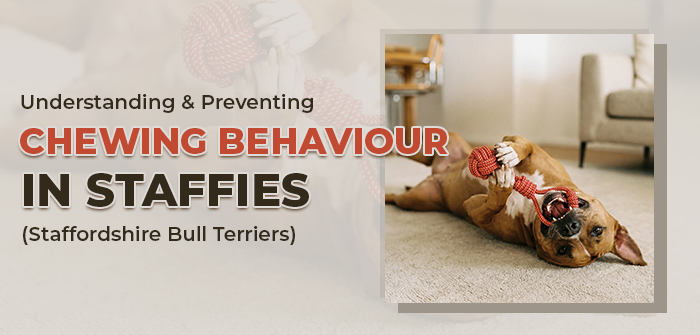
Having an adorable Staffy in the family, with a not-so-cute chewing habit? You are not alone. Staffordshire Bull Terriers are a great companion indeed. But some of them can be ardent chewers. From carpets and furniture to their own beds and blankets, Staffies may enjoy chewing a range of things. But that does not make these loving dogs baddies, as this behaviour can be reduced with some effort by pet parents. So, how can you stop your Staffy from chewing everything? Let’s find out.
This blog covers information about reasons your Staffy can get involved in the chewing habit and ways to control this chewing behaviour. Read on to learn more.
Why do Staffies chew so much?
Staffordshire Bull Terriers are people-loving dogs. They enjoy the company of their humans practically all day long. That’s why some dogs may suffer from separation anxiety when left alone. Additionally, dogs of this energetic breed need routine outdoor walks and playtime, and are very likely to have pent up energy in the absence of adequate exercise. Because of these traits, Staffies can easily turn to chewing anything and everything that comes within their reach when they do not get enough attention or physical and mental stimulation.
Reasons behind the chewing behaviour
To solve a problem, it is important to find out its root cause first. Your otherwise lovely Staffy may turn to chewing in one or more of the following circumstances:
- Teething or exploration at the puppy stage: A Staffy pup, like any other puppy, will feel the discomfort of teething or may just want to explore by chewing things. This generally helps provide temporary relief from the teething discomfort, or is also a way to explore the surroundings.
- Boredom or pent up-energy: Adult Staffies can end up chewing anything, such as furniture, cushions, shoes, rugs, and more, when they do not get enough exercise or attention from their humans. In this case, chewing is their way of keeping themselves entertained or spending the pent-up energy.
- Separation anxiety or restricted area-induced restlessness: When the chewing destruction is concentrated on exit points, such as door frames, window sills, or crate gates, this indicates that your Staffy is eager to escape the situation. This usually happens either due to separation anxiety when you are not home, or when your dog feels insecure and restless associated with confinement. In such cases, you may also observe barking, pacing, or house soiling incidents along with frantic chewing.
- Nutritional gaps: Sometimes, you may notice your fur friend chewing non-food items, such as clothing, plastic or rubber items etc. This condition may occur as a result of nutritional gaps or other illnesses and is known as Pica. If you are unsure about your pet’s nutritional intake or if they keep chewing odd things, consult your veterinarian to find out any suspected health concerns.
Ways to control chewing in Staffies
Once the cause of the chewing behaviour is identified, the next step is to address the triggers. Here are a few tips to control and prevent your fur baby’s chewing behaviour:
- Remove temptations: Pets cannot differentiate between things that are ok to chew and the ones that are not. Make it a habit to keep things, like clothes, shoes, cables, books, etc., out of reach of your pet, especially when you are away. For the furniture that cannot be moved, use baby gates to restrict your pet’s access.
- Provide adequate exercise: A tired pet is less likely to get involved in destructive behaviour. Staffies, being full of energy, require regular walks and physical exercise. This gives them an avenue to spend their energy. Take your Staffy outdoors regularly for walks and playtime to provide them with enough exercise.
- Give chew toys: Dogs really enjoy chew toys, with chewing being their natural instinct. Provide your pet with different chew toys that can satisfy their instinct and keep them engaged for a long time. You may try long-lasting chew toys, like GiGwi Wooden Antler Strong Chew Toy, or flavoured chew toys, like Benebone Wishbone Bacon Chew Toy, to keep your canine friend entertained.
Pro tip: Give toys to your dog in rotation, so that they do not get bored playing with the same toys every day. - Don’t ignore mental stimulation: Physical exercise is definitely important. But mental stimulation also plays an important role in channelising your dog’s energy away from destructive activities. Food puzzles or treat toys, like Starmark Treat Dispensing Chew Ball Toy, KONG Genius Treat-Release Puzzle Toy, etc., may come in handy when you are trying to provide mental stimulation to your fur buddy.
- Try restricting access for alone time: When the reason for chewing is your dog’s separation anxiety, you will find more damage done while you are away. If this is the case, restricting your dog’s access during their alone time may help minimise destruction. You can crate-train your pet for such times, or try a kennel or confine their movements to a dedicated and safe chew zone in the house.
- Use bitter sprays: Try to protect immovable furniture with pet-safe bitter sprays. These sprays have an unpleasant taste that can discourage dogs from chewing the item further. Use pet-safe sprays liberally over places like chair and table legs, walls, etc. And while your dog gets discouraged by the taste, divert them towards the toys or things that are ok to chew. This will help train your dog to stay away from items that are not to be chewed and pursue toys meant for chewing.
Concluding note
Staffordshire Bull Terriers, or Staffies as they are called affectionately, are generally friendly and develop deep attachment with their human families. However, they may test the patience of their humans by getting involved in destructive chewing behaviour for multiple reasons. The tips listed in this blog will help reduce your Staffy’s unwanted chewing and keep them happy as well as your valuables safe. If your dog still faces the same behavioural issues, speak with a qualified veterinarian for professional help.
Frequently asked questions
Q. What are the best chew toys for a Staffy that destroys everything?
A. Long-lasting and tough chew toys, made from durable materials, may serve the purpose. Choose toys that are right for your dog’s age, size, and chewing style. Check out the dog toys collection on VetSupply to find the one that is right for your dog’s age, size, and requirement.
Q. How do I teach my Staffy what they are allowed to chew?
A. Pat them gently, use verbal cues like ‘nice’ or ‘yes’, and provide a treat as part of positive reinforcement every time your dog selects something that is meant for their chewing. If they chew an inappropriate item, gently redirect them to an appropriate item.
Q. What should I do if my Staffy only chews things when left alone?
A. Provide a dedicated chew zone where only the things they are allowed to chew are kept. You may also consider restricting their access to larger areas to control destruction. Additionally, this behaviour may suggest separation anxiety, which needs veterinary treatment.
Q. How do I stop my Staffy puppy from chewing and biting everything?
A. Provide them with chew toys that are safe for puppy teeth and are meant for teething discomfort relief. You may also divert your pup’s attention from items they are not supposed to chew to the chew toys and give treats as training rewards.
