Best Dog Food in Australia: Dog Nutrition, Types, and Selection Guide

Feeding your dog a healthy and balanced diet is one of the most important parts of responsible pet care. The right nutrition supports your dog’s growth, energy levels, digestion, skin and coat health, immune function, and overall wellbeing. However, with so many dog food options available in Australia, choosing the best one for your furry companion can often feel overwhelming.
From dry kibble and wet food to grain-free and specialised veterinary diets, each food type offers different benefits. Understanding the basics of dog nutrition and knowing what to look for in quality dog food can make the selection process much easier.
In this guide, we’ll explore the essential nutrients dogs need, the common types of dog food available, some of the top dog food brands in Australia, and practical tips to help you choose the right diet for your pet.
What Do Your Dog’s Nutritional Needs Include?
In this segment, we’ll take a look at the key nutrients found in a healthy dog diet:
- Protein: Protein is an integral component of dog nutrition that helps build and repair muscles, tissues, and organs. High-quality animal protein sources such as chicken, lamb, beef, fish, and turkey are commonly used in dog food formulas.
- Fats: Inclusion of healthy fats is also essential because they provide energy and contribute to brain function, skin health, and a shiny coat. Omega-3 and omega-6 fatty acids are particularly beneficial for dogs.
- Carbohydrates: Carbohydrates provide sustainable energy and can support healthy digestion when included in balanced amounts. Common carbohydrate sources include rice, oats, sweet potatoes, and vegetables.
- Vitamins and Minerals: Vitamins and minerals are vital for various bodily functions and maintaining overall health.
- Water: Adequate hydration is vital for digestion, nutrient absorption, circulation, and temperature regulation. Make sure your dog always has access to fresh, clean water.
A balanced combination of these components makes the foundation of a healthy diet for dogs. Your dog’s nutritional requirements can vary depending on several factors, including:
- Age and life stage
- Breed/size
- Activity levels
- Weight goals
- Existing health conditions
- Food sensitivities or allergies
What Are the Common Types of Dog Food?
Dog food is available in several formats, each designed to suit different feeding preferences and nutritional needs. Let’s take a closer look at the common types:
Dry Dog Food
Dry dog food, also known as kibble, is one of the most popular feeding choices. What makes it popular is the convenience it offers, as it is easy to store, cost-effective, and has a long shelf life.
Moreover, the crunchy texture and peculiar shape of kibble may also help reduce plaque and tartar build-up, supporting better dental health. Many dry foods are formulated to provide complete and balanced nutrition for dogs of different life stages and breeds.
Air-Dried Dog Food
Air-dried dog food is another growing category. It combines the convenience of dry food with gentler processing methods that help retain nutrients and flavour while offering a nutrient-dense, high-protein feeding option.
Air-dried diets may be suitable for senior dogs, picky eaters, or dogs with food sensitivities.
Wet Dog Food
Wet dog food contains higher moisture levels, making it a highly palatable and hydrating option for dogs. Its rich aroma and softer texture are generally ideal for fussy eaters or senior dogs with dental issues.
Wet food can be served on its own or mixed with kibble to increase variety and water intake. However, it should be noted that opened cans or pouches require refrigeration and have a shorter shelf life after opening.
Health-Specific Dog Food
Health-specific dog food is specially formulated to support particular health concerns and improve your dog’s overall wellbeing. These diets may help manage issues related to dental health, joint function, digestion, weight management, skin sensitivities, and more.
For example, dental dog food often features unique kibble textures and shapes that may help reduce plaque and tartar build-up while supporting healthier gums and fresher breath. Similarly, joint support dog food is commonly designed for senior dogs, large breeds, or dogs prone to mobility issues. These formulas often contain beneficial ingredients such as glucosamine, chondroitin, omega fatty acids, and controlled calorie levels to help support joint health and maintain healthy weight management.
Grain-Free Dog Food
Grain-free dog food excludes common grains such as wheat, corn, barley, and rice. Instead, these recipes use alternative carbohydrate sources such as sweet potato, lentils, or peas.
These diets may particularly benefit dogs with specific grain sensitivities. Grain-free diets should be selected when recommended by a veterinarian, as they may not be necessary for every dog.
Dog Treats
Dog treats are commonly used for training, rewarding good behaviour, and occasional snacking. They are available in many forms, including biscuits, jerky treats, dental chews, freeze-dried snacks, and soft treats.
Treats are an important part of a dog’s diet, but they should complement their main diet and be fed in moderation to avoid excess calorie intake.
Top Dog Food Brands in Australia
Australia has a wide range of dog food brands catering to different dietary preferences, health conditions, and budgets. Here is a quick comparison of the five most recognised dog food brands in Australia:
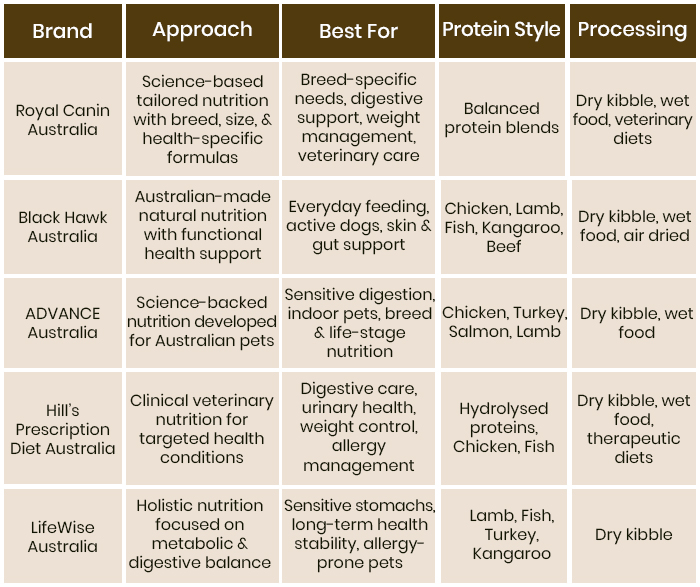
Each brand offers unique nutritional benefits. However, the ideal choice ultimately depends on your dog’s specific requirements.
How to Choose Healthy Dog Food for Dogs?
Selecting healthy dog food involves more than simply choosing a popular brand. Every dog has different dietary requirements, so it’s important to evaluate several factors before making a decision. Here are some things that you need to keep in mind:
Consider Your Dog’s Age and Size
Puppies, adult dogs, and senior dogs all have different nutritional requirements. For example, young dogs and puppies may require a diet rich in protein, fats, and calcium to support their rapid growth, developing muscles, and strong bones. On the other hand, adult dogs may need carbohydrates, protein, fats, vitamins and minerals to sustain muscles and optimal energy levels. Several brands categorise their products based on sizes and life stages. Select appropriate food that aligns with your dog’s age and life stage.
Read the Ingredient List
Reading the ingredient list carefully is one of the best ways to assess the quality of dog food. Look for clearly identified protein sources such as chicken, lamb, beef, turkey, or fish listed among the primary ingredients. A balanced dog food should also contain healthy fats, vitamins, minerals, and functional ingredients that support overall health and wellbeing. Additionally, check for feeding guidelines, nutritional adequacy statements, and ingredient transparency to make a more informed choice.
Consider Your Pet’s Health Conditions
Your dog’s health condition can significantly impact their nutritional requirements. If your dog is dealing with allergies, digestive issues, obesity, skin sensitivities, or other chronic diseases, they will need specialised nutrition. It’s crucial to consult a vet and select a tailored diet catering to your dog’s specific health condition.
Explore Breed-Specific Food
Different dog breeds often have unique nutritional requirements based on their size, body structure, metabolism, and common health concerns. For example, large breeds like Golden Retrievers and German Shepherds may benefit from foods enriched with joint-support nutrients, while small breeds often require calorie-dense formulas to support their faster metabolisms. Some brands also offer breed-specific formulas tailored to the distinct dietary needs of particular breeds.
Evaluate Lifestyle and Activity Levels
Your dog’s activity level plays an important role in determining their dietary needs. Highly active or working dogs generally require higher protein and calorie intake to maintain energy and muscle condition. On the other hand, less active or indoor dogs may benefit from controlled-calorie diets to help maintain a healthy weight and avoid obesity-related issues.
Consider Your Pet’s Preferences
Every dog has different food preferences and eating habits. Some dogs thrive on dry kibble, while others may prefer wet food, raw diets, or mixed feeding approaches. Choosing a food format that your dog enjoys can help encourage consistent eating while also supporting their nutritional requirements and feeding routine.
Consult Your Veterinarian
Consulting your veterinarian is one of the most reliable ways to select the right food for your dog. The vet can recommend the most suitable diet after considering your dog’s breed, age, weight, activity level, medical history, and overall health condition. This becomes especially important if your dog is dealing with health conditions requiring specialised nutrition.
Parting Words
Choosing the best dog food in Australia starts with understanding your dog’s unique nutritional needs. Factors such as age, breed, activity level, lifestyle, and existing health conditions all play an important role in selecting the right diet. Keep in mind the selection guide covered in this informative guide and select the right food for your beloved doggo. However, if you have any doubts about your dog’s dietary requirements, it’s best to consult your veterinarian. Their professional advice can help ensure your furry companion receives the most suitable nutrition for a healthy and happy life.
