Dog Anxiety Explained: Why It Happens and How to Help Your Dog Relax
Anxiety in dogs is more common than many pet parents realise. Dogs may not speak our language, but they do communicate their emotions through behaviour. When a dog experiences anxiety, it can show up in subtle behaviours which may escalate into destructive actions if not addressed. And as responsible pet parents, it’s our responsibility to understand and extend care for the well-being of our canine partners.
In this guide, we’ll explore the different types of anxiety in dogs, the signs to watch for, and the underlying causes. We’ll also help you understand dog anxiety treatment options and cover some practical ways you can help your furry companion feel calmer and more secure.
We’re diving right into it!
Types of Anxiety in Dogs
Anxiety in dogs can manifest in a variety of ways and is not as simple as it appears on the surface. Here are the various types of anxiety dogs can experience:
Fear-based anxiety: Fear-based anxiety can be triggered by unfamiliar people, animals, environments, or even unusual objects. Your dog may react strongly to sudden changes, objects, or strangers entering their space.
Separation anxiety: This is one of the most talked-about forms, where dogs with separation anxiety panic when left alone or separated from their caretakers. It often leads to destructive behaviours, excessive barking, or attempts at escaping.
Trauma or past negative experience: Rescue dogs or dogs with abusive histories may carry emotional scars that resurface in certain situations. A raised voice or sudden movement can trigger past memories and cause anxiety.
Fear of loud noises: Dogs can experience intense stress with loud noises such as thunderstorms, fireworks, or even household appliances like vacuum cleaners, sending them into a frenzy.
Travel anxiety: For some dogs car rides or flights can be overwhelming, especially if they associate travel with vet visits or other stressful events. They may also experience anxiety due to the confined space of a car.
Underlying medical conditions: Sometimes anxiety can be linked with underlying painful medical conditions like neurological issues or hormonal imbalances. Dogs may also feel down or stressed when they are ill, as they may not understand what’s happening with them.
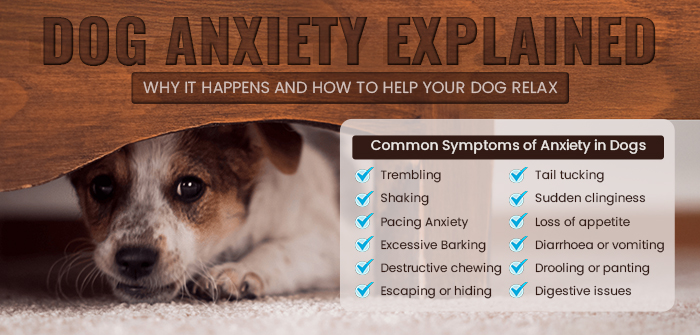
Common Symptoms of Anxiety in Dogs
Anxiety in dogs can be observed with subtle behavioural changes. Here are a few symptoms that you must look out for:
- Trembling
- Shaking
- Pacing or inability to settle
- Continuous barking or whining
- Destructive chewing
- Escaping or hiding
- Tail tucking
- Sudden clinginess
- Loss of appetite
- Diarrhoea or vomiting
- Drooling or panting
- Digestive issues
Think of these as your dog’s way of saying, “I’m not okay.” And if you notice these signs often, it’s worth digging deeper.
What Causes Anxiety in Dogs?
Anxiety in dogs doesn’t appear out of nowhere; it is often triggered by deep-rooted causes. Let’s discuss some of these causes:
- Genetics: Certain breeds, like Border Collies or German Shepherds, are more prone to nervousness due to their high sensitivity and intelligence.
- Age-related issues: Older dogs can experience anxiety due to conditions like Cognitive Dysfunctional Syndrome (CDS), which is similar to Alzheimer’s disease.
- Environment: Anxiety can also manifest because of living in environments with a lack of socialisation, chaotic households, or exposure to stressful situations.
- Changes in routine: Situations such as moving houses, new family members, or alterations in schedule can disrupt a dog’s sense of safety, leading to anxiety.
- Medical issues: Pain, illness, or discomfort can make dogs irritable and anxious.
- Pet parent behaviour: Dogs mirror our emotions and can pick up on our stress, fear, and anxiety. If you’re stressed, your dog may share the emotion and also feel stressed.
How to Treat and Manage Anxiety in Dogs?
In this segment, we’ll discuss various dog anxiety treatment options and tips to help calm your canine companion.
Exercise and play: Physical activity like exercise and play helps release pent-up energy, which otherwise may turn into aggression. Plus, it’ll help build a routine and strengthen your bond with them.
Create a safe space: Provide your dog with a space where they can feel secure. It can be a crate, a bed, or a quiet designated room.
Remove potential triggers: Once you recognise the causes, try to remove potential triggers to provide a safe space for your pet.
Use calming aids: You can employ calming aids such as weighted vests, herbal supplements, pheromone diffusers, or soothing music to reduce stress.
Maintain a routine: Dogs thrive on predictability, so it’s best to create and follow a schedule for routine activities like feeding, walking, and playing.
Behavioural training: You can consult a professional trainer or behaviourist who can provide tailored strategies to help your beloved doggo.
Medical support: In chronic cases, veterinarians may prescribe anti-anxiety treatments or recommend natural remedies to help alleviate the condition.
Parting Words
Dog anxiety can be challenging for both pets and pet parents, but with patience and the right knowledge, it can be managed effectively. By recognising the signs early, identifying potential triggers, and providing consistent care, you can help your dog feel more secure and confident.
